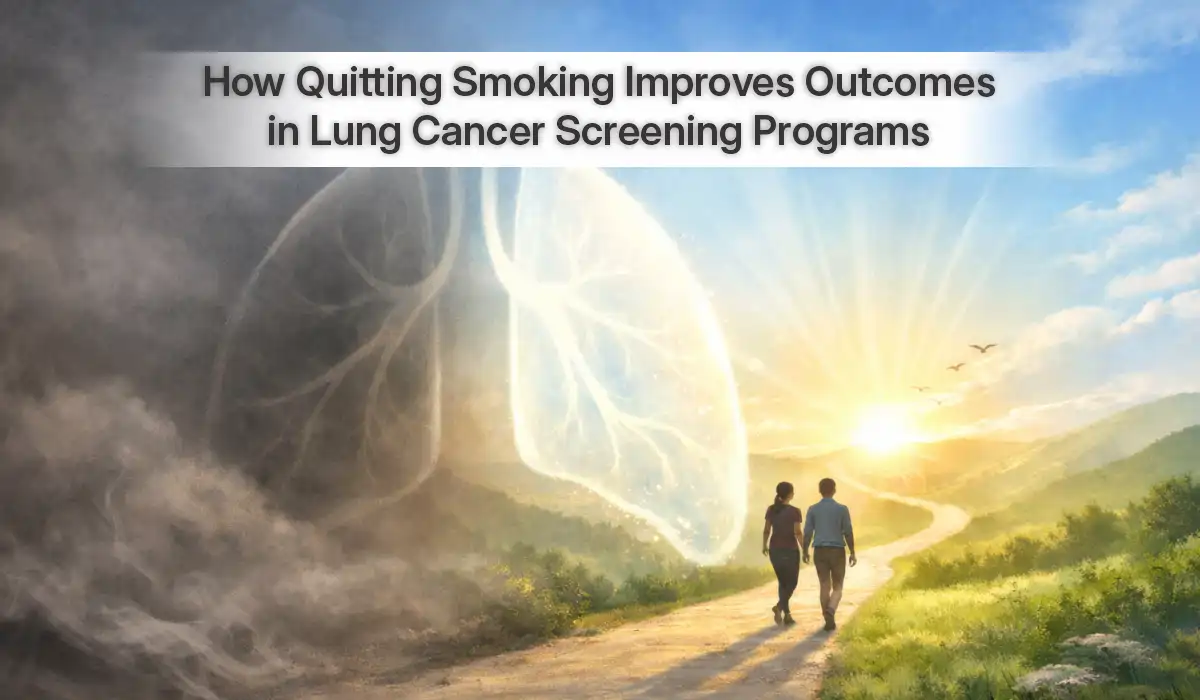
Have you ever wondered why doctors emphasize quitting smoking even after someone has already enrolled in a lung cancer screening program? Many people assume screening alone is enough—that early detection will solve the problem. But research and real-world outcomes show something far more powerful: quitting smoking dramatically improves the effectiveness of lung cancer screening itself.
Understanding this connection can change how individuals, families, and healthcare systems approach prevention, early detection, and long-term survival.
This article explains how quitting smoking improves outcomes in lung cancer screening programs, why the combination matters, and what it means for people at different stages of risk.
What Lung Cancer Screening Programs Are Designed to Do
Lung cancer screening programs are structured medical initiatives aimed at detecting lung cancer before symptoms appear, when treatment is more effective.
Most programs use low-dose computed tomography (LDCT) scans to identify small lung nodules in people at high risk—primarily current or former smokers.
The goal is not diagnosis alone, but:
- Earlier detection
- Less invasive treatment
- Better survival rates
- Reduced lung cancer mortality
However, screening works best when it is part of a broader risk-reduction strategy, not as a standalone solution.
How Quitting Smoking Improves Outcomes in Lung Cancer Screening Programs
The core idea behind how quitting smoking improves outcomes in lung cancer screening programs is simple but powerful:
Screening detects disease.
Smoking cessation changes disease progression.
When people stop smoking:
- Lung tissue begins repairing itself
- Inflammation decreases
- Cancer growth rates slow
- Treatment responses improve
This means that the same screening test produces better outcomes in people who quit smoking than in those who continue.
Why Smoking Undermines the Effectiveness of Screening
Screening identifies abnormalities, but smoking continues to damage lung tissue in real time. This creates several problems:
- New tumors can develop between screening intervals
- Existing nodules may grow faster
- Inflammation can cause false-positive results
- Imaging becomes harder to interpret accurately
When smoking continues, screening becomes reactive rather than preventive.
Quitting smoking changes this dynamic entirely.
Biological Changes After Smoking Cessation That Improve Screening Results
One reason how quitting smoking improves outcomes in lung cancer screening programs is so well-supported is the biological response of the lungs after cessation.
Within weeks to months of quitting:
- Ciliary function improves, helping clear toxins
- Chronic airway inflammation decreases
- DNA damage repair mechanisms activate
- Oxygen delivery to tissues improves
Over time, these changes reduce cancer aggressiveness and improve detectability, allowing screening tools to work more precisely.
Reduced False Positives and Unnecessary Procedures
One often-overlooked benefit of quitting smoking is its impact on screening accuracy.
Active smokers have higher rates of:
- Benign lung nodules
- Inflammatory lesions
- Scar tissue that mimics cancer
This leads to:
- More false-positive results
- Additional imaging
- Invasive biopsies
- Increased anxiety and cost
People who quit smoking experience cleaner imaging profiles, which helps screening programs focus on true cancer risks rather than noise.
Improved Treatment Outcomes When Cancer Is Detected
Screening does not end with detection—it leads to treatment decisions. This is where quitting smoking becomes even more critical.
Patients who stop smoking before or after detection tend to:
- Tolerate surgery better
- Heal faster after procedures
- Respond more effectively to radiation therapy
- Experience fewer chemotherapy complications
This is another key reason how quitting smoking improves outcomes in lung cancer screening programs is not just about prevention, but about survivorship.
Smoking Cessation and Slower Cancer Progression
Multiple studies show that tumors in former smokers often grow more slowly than those in current smokers.
Slower progression means:
- More time for intervention
- Less aggressive treatment required
- Higher chances of curative surgery
- Better long-term quality of life
Screening combined with smoking cessation creates a time advantage, which is one of the most valuable assets in cancer care.
Psychological and Behavioral Benefits of Quitting During Screening
Lung cancer screening can be a powerful “teachable moment.”
When individuals see their lung images or receive risk assessments, many become more motivated to quit smoking. This behavioral shift has lasting benefits:
- Increased engagement with follow-up care
- Better adherence to screening schedules
- Greater trust in preventive healthcare
- Reduced fatalism about lung cancer
Programs that integrate smoking cessation counseling consistently show better overall outcomes.
How Screening Programs Integrate Smoking Cessation Support
Modern lung cancer screening programs increasingly include:
- Smoking cessation counseling
- Behavioral therapy referrals
- Nicotine replacement therapy
- Ongoing follow-up support
This integrated approach recognizes that screening without cessation limits long-term success.
Healthcare systems that treat quitting smoking as part of screening—not a separate issue—see stronger population-level results.
Former Smokers vs Current Smokers: Outcome Differences
Data consistently shows meaningful differences between former and current smokers in screening outcomes.
Former smokers:
- Have lower lung cancer mortality
- Require fewer invasive procedures
- Experience better post-diagnosis survival
- Show improved overall lung health over time
These differences explain why eligibility criteria often prioritize years since quitting, and why quitting remains beneficial even after decades of smoking.
Common Misconceptions About Smoking and Screening
Many people misunderstand the relationship between smoking and screening.
Some common myths include:
- “Screening makes quitting unnecessary”
- “Damage is already done”
- “Quitting won’t change outcomes now”
In reality, how quitting smoking improves outcomes in lung cancer screening programs is supported at every stage—from prevention to post-treatment recovery.
It is never too late to benefit from stopping.
Equity, Access, and Long-Term Public Health Impact
At a population level, combining smoking cessation with screening:
- Reduces healthcare costs
- Improves screening efficiency
- Lowers overall lung cancer mortality
- Reduces health disparities in high-risk groups
Communities with strong cessation support embedded in screening programs see more sustainable public health improvements over time.
Conclusion: Screening Works Best When Smoking Stops
Lung cancer screening saves lives—but it works best when paired with smoking cessation. The evidence is clear: how quitting smoking improves outcomes in lung cancer screening programs is not theoretical, but practical, measurable, and life-changing.
Quitting smoking transforms screening from a detection tool into a true prevention strategy. It improves accuracy, enhances treatment success, and gives individuals more control over their health future.
For anyone enrolled in or considering lung cancer screening, the most powerful step they can take alongside screening is simple, difficult, and profoundly effective: stop smoking.
Latest Post
- Pharma Company in Gujarat: The Backbone of India’s Healthcare Growth

- Why Gujarat Is Home to Some of India’s Strongest Pharma Companies

- Pharma Company in Gujarat: Quality Manufacturing That Builds Trust

- How a Trusted Pharma Company in Gujarat Ensures Regulatory Excellence

- Pharma Company in Gujarat: A Strategic Choice for Healthcare Expansion

- Pharma Company in Greater Noida: Your Guide to Safe and Reliable Solutions

Web Stories