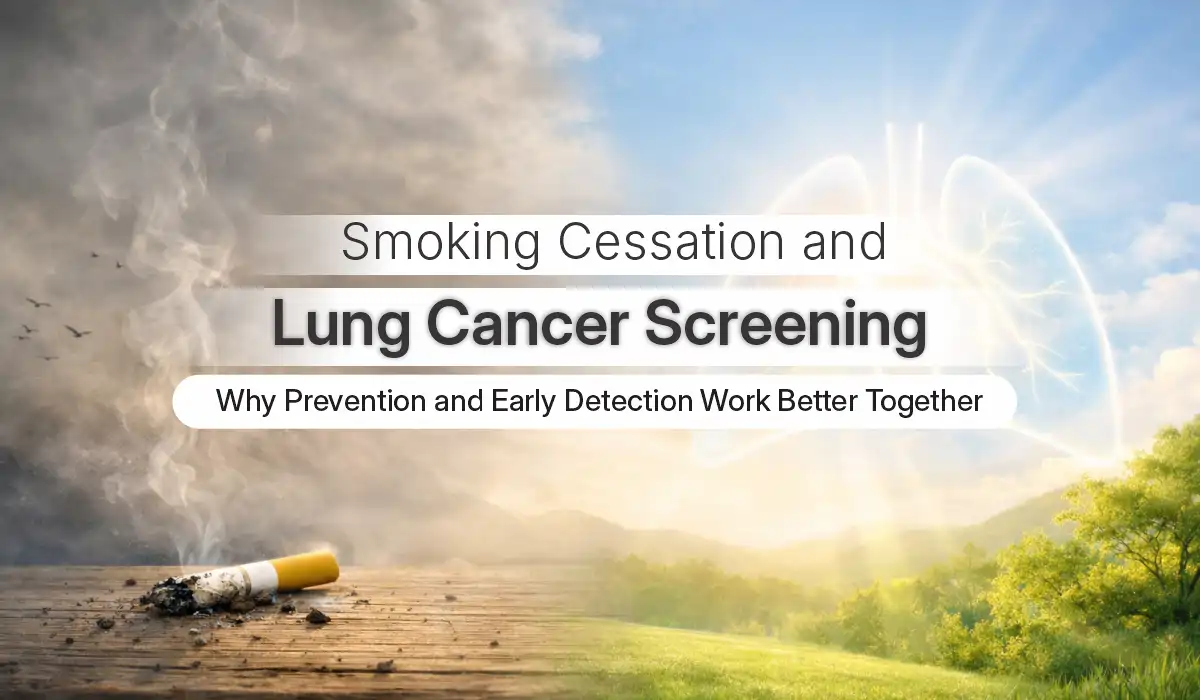
Have you ever wondered why two people with similar smoking histories can have such different health outcomes? One quits early and gets screened on time, catching a problem before it grows. Another keeps delaying, assuming symptoms will warn them first. The difference often isn’t luck—it’s the powerful combination of smoking cessation and lung cancer screening working together.
Around the world, lung cancer remains one of the leading causes of cancer-related deaths. Yet many of these deaths are preventable or can be delayed through timely action. This article explains—clearly and practically—why stopping smoking and getting screened are not competing choices, but complementary ones. When combined, they offer a far stronger path to prevention, early detection, and better outcomes than either approach alone.
What Smoking Cessation and Lung Cancer Screening Really Mean
Smoking cessation is the process of stopping tobacco use, whether cigarettes, cigars, or other smoked products. It includes behavioral support, counseling, and—when appropriate—medications that reduce cravings and withdrawal symptoms.
Lung cancer screening refers primarily to low-dose computed tomography (LDCT) scans used to detect lung cancer at an early stage in people at higher risk, particularly long-term smokers or former smokers.
Together, these strategies address two sides of the same problem. Smoking cessation reduces future risk and improves overall health. Lung cancer screening looks for existing disease early, when treatment is more effective and less invasive.
Why Lung Cancer Is Often Found Too Late
Lung cancer is notoriously quiet in its early stages. Many people feel fine until the disease has advanced, at which point treatment options are more limited.
Symptoms such as persistent cough, shortness of breath, chest pain, or weight loss often appear late. This delay is why early detection through screening is so important—especially for people with a history of smoking.
Screening does not prevent cancer from forming. It prevents cancer from going unnoticed.
How Smoking Increases Lung Cancer Risk Over Time
Smoking damages lung tissue gradually. With each exposure, harmful chemicals trigger inflammation and genetic changes in cells. Over years or decades, this damage accumulates.
Key facts to understand:
- Risk increases with duration and intensity of smoking.
- Even light or intermittent smoking raises risk.
- Secondhand smoke exposure also contributes to lung cancer risk.
- Quitting at any age reduces risk, though it never returns fully to that of someone who never smoked.
This long timeline is exactly why early action matters.
The Benefits of Quitting Smoking—Beyond the Lungs
Stopping smoking has immediate and long-term benefits, many of which begin within days or weeks:
- Improved lung function and circulation
- Reduced inflammation throughout the body
- Lower risk of heart disease and stroke
- Better immune response
- Improved response to cancer treatments if cancer is detected later
Importantly, quitting smoking also improves the accuracy of screening and reduces complications if treatment is needed.
How Lung Cancer Screening Works in Practice
Low-dose CT screening uses a small amount of radiation to create detailed images of the lungs. It can detect small nodules that are not visible on standard chest X-rays.
Screening is typically recommended for:
- Adults aged 50–80 (guidelines vary slightly by country)
- Individuals with a significant smoking history
- Current smokers or those who quit within the past 15 years
Screening is not a one-time test. It works best as part of a regular, structured program with follow-up and clinical guidance.
Why Screening Alone Is Not Enough
Some people believe that getting screened means they can continue smoking safely. This is a dangerous misunderstanding.
Screening:
- Does not prevent cancer from forming
- Does not protect against other smoking-related diseases
- Can detect cancer early, but cannot undo ongoing damage
Without smoking cessation, screening becomes a safety net with holes. Quitting smoking strengthens that net dramatically.
Why Smoking Cessation Alone Is Also Not Enough
On the other hand, some former smokers assume that quitting means they no longer need screening. While quitting significantly lowers risk, it does not eliminate it immediately.
Former smokers remain at higher risk for many years. Screening during this period can detect cancers that began developing before cessation or shortly afterward.
The strongest protection comes from combining both strategies.
How Prevention and Early Detection Reinforce Each Other
When smoking cessation and lung cancer screening are offered together, several positive effects emerge:
- People who undergo screening are more likely to quit smoking
- Counseling during screening visits reinforces cessation efforts
- Early detection improves motivation to stay smoke-free
- Overall survival rates improve when cancers are found early
In practice, this creates a cycle of prevention, awareness, and healthier choices.
Real-Life Scenarios: When Timing Makes the Difference
Scenario 1:
A 55-year-old smoker quits after 30 years and enrolls in annual screening. A small lung nodule is detected early. Treatment is minimally invasive, and long-term outcomes are favorable.
Scenario 2:
A similar individual quits but avoids screening. Years later, symptoms appear. The cancer is advanced, treatment is more complex, and outcomes are uncertain.
The difference is not willpower alone—it’s coordinated care.
Addressing Common Fears and Misunderstandings
Many people delay screening or quitting due to fear or misinformation.
Common concerns include:
- Fear of radiation exposure from CT scans
- Anxiety about possible results
- Belief that quitting “too late” won’t help
- Worry about stigma or judgment
In reality, low-dose CT scans use minimal radiation, and early knowledge provides options—not punishment. Quitting smoking improves health at any stage.
The Role of Healthcare Providers and Support Systems
Healthcare providers play a critical role in aligning smoking cessation and screening. When clinicians:
- Discuss both options together
- Provide clear eligibility guidance
- Offer counseling and follow-up
Patients are more likely to take action. Integrated programs consistently show better outcomes than fragmented care.
Smoking Cessation and Lung Cancer Screening in the Global Context
While guidelines vary across countries, the core principles remain the same. As populations age and tobacco use patterns evolve, combining prevention with early detection is increasingly recognized as a best practice worldwide.
This approach is adaptable to different healthcare systems, cultures, and risk profiles, making it relevant far beyond any single country.
Key Takeaways to Remember
Smoking cessation and lung cancer screening are not alternatives—they are partners. One reduces future risk, the other finds problems early. Together, they offer the best chance to prevent lung cancer deaths, improve quality of life, and support long-term health.
If you or someone you care about has a history of smoking, understanding and combining these approaches can make a meaningful difference—not someday, but now.
Latest Post
- Better Hydration Starts Here: 10 Common Mistakes and Simple Fixes

- From the Laboratory to the Clinic: The Rise of Precision Cancer Medicine

- Delhi Flu Alert: What the Rise in H1N1 Cases Means for Families

- Why Won’t Your Cholesterol Improve? The Possible Role of Liver Insulin Resistance

- Precision Cancer Treatment: How Scientists Are Targeting Tumors More Accurately

- Gut Bacteria and Colon Cancer: What a New Study Reveals About Western Diets

Web Stories